
How to set a Calorie Deficit Calculator
Introduction
Achieving weight loss doesn’t require extreme dieting or quick fixes—it’s about understanding calories and how they affect your body. One of the most effective, sustainable ways to lose weight is by creating a calorie deficit. This simply means burning more calories than you consume, which forces your body to use stored fat for energy.
In this comprehensive guide, we’ll show you how to set a calorie deficit, track your progress, and achieve healthy, sustainable weight loss without the need for restrictive diets or gimmicks.
What Is a Calorie Deficit?
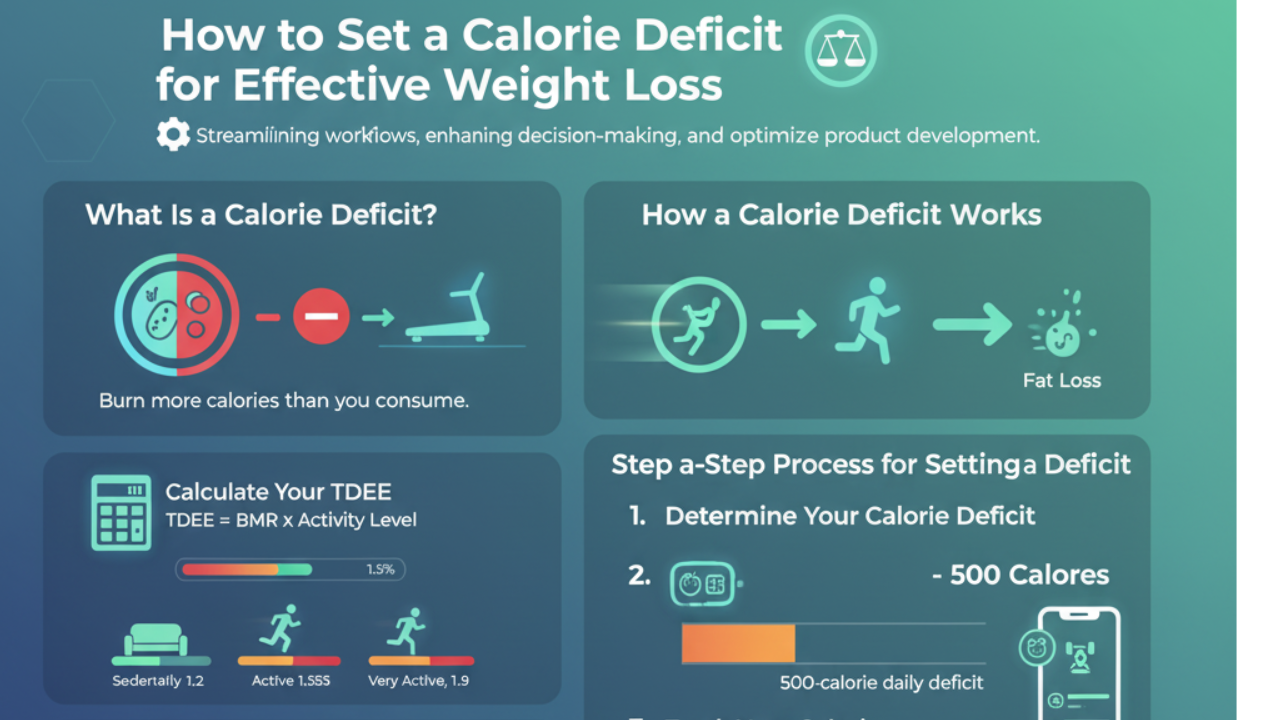
A calorie deficit occurs when you consume fewer calories than your body needs to maintain its current weight. Your body compensates for the energy deficit by burning stored fat for fuel, resulting in weight loss.
How It Works:
-
Daily Caloric Needs: Your body requires a certain number of calories each day for basic functions like breathing, digestion, and physical activity. This is called your Total Daily Energy Expenditure (TDEE).
-
Calorie Intake: This is the number of calories you consume through food and beverages.
-
Creating a Deficit: To lose weight, your calories consumed must be less than your TDEE. A 500-calorie deficit per day, for example, will result in losing about 1 pound per week (since 3,500 calories equals approximately 1 pound of fat).
Why Is a Calorie Deficit Important for Weight Loss?
A calorie deficit is the foundation of all weight loss. No matter how you approach it, reducing calorie intake below the amount your body uses will lead to weight loss. Here’s why understanding the calorie deficit is key:
| Factor | Impact of Calorie Deficit |
|---|---|
| Weight Loss | A calorie deficit forces the body to burn stored fat, resulting in gradual and healthy weight loss. |
| Fat Loss | By focusing on fat rather than muscle loss, a moderate calorie deficit preserves muscle mass while targeting fat. |
| Control and Flexibility | You can adjust the size of your calorie deficit based on your weight loss goals, making it personalizable. |
| Sustainability | Unlike extreme diets, creating a manageable deficit allows for consistent weight loss without drastic restriction. |
How to Set a Calorie Deficit Calculator

Setting a calorie deficit is not complicated, but it requires careful calculation and some trial and error to ensure sustainability. Here’s a step-by-step guide to help you create your calorie deficit and start your weight loss journey:
1. Calculate Your TDEE (Total Daily Energy Expenditure)
Your TDEE is the number of calories your body burns in a day. It includes calories burned through basic functions (like breathing and digestion), plus those used during physical activity.
Formula:
To estimate your TDEE, you need to calculate your Basal Metabolic Rate (BMR) first, then adjust for your activity level.
TDEE = BMR x Activity Level
BMR: The number of calories your body needs at rest to maintain basic functions. You can use a BMR calculator or apply the Mifflin-St.. Jeor formula:
-
For men:
BMR = 10 × weight + 6.25 × height – 5 × age + 5 -
For women:
BMR = 10 × weight + 6.25 × height – 5 × age – 161
Activity Level: Multiply your BMR by the following activity factors:
-
Sedentary (little or no exercise): BMR × 1.2
-
Lightly active (light exercise/sports 1-3 days/week): BMR × 1.375
-
Moderately active (moderate exercise/sports 3-5 days/week): BMR × 1.55
-
Very active (hard exercise/sports 6-7 days a week): BMR × 1.725
-
Super active (very hard exercise/sports and a physical job): BMR × 1.9
Example:
If your BMR is 1,800 calories and you are moderately active, your TDEE would be approximately:
TDEE = 1,800 × 1.55 = 2,790 calories.
2. Determine Your Calorie Deficit Calculator
To start losing weight, you’ll need to create a calorie deficit. A 500-calorie deficit per day is a common and safe starting point for most people.
-
Example: If your TDEE is 2,790 calories, you would aim to consume 2,290 calories per day to create a 500-calorie deficit.
-
A larger deficit (e.g., 1,000 calories) will result in faster weight loss but may also increase the risk of muscle loss, fatigue, and nutrient deficiencies, so it’s best to aim for a moderate deficit.
3. Track Your Caloric Intake and Adjust
The most important part of creating a successful calorie deficit is tracking your calories. Use tools like a food diary, a nutrition app, or a calorie tracking app to log your meals and snacks. This will give you a clear picture of your daily intake and ensure you stay within your calorie target.
Tip: Stick to a realistic and sustainable calorie goal. Avoid drastic restrictions, which can lead to burnout or nutrient deficiencies.
How Much of a Calorie Deficit Should You Aim For?
While a 500-calorie deficit is often recommended for safe weight loss, the amount of your deficit depends on your weight loss goals and how quickly you want to lose weight.
| Goal | Suggested Calorie Deficit |
|---|---|
| Slow, Sustainable Weight Loss | 500-750 calories per day (results in 1-1.5 pounds lost per week) |
| Moderate Weight Loss | 750-1,000 calories per day (results in 1.5-2 pounds lost per week, but may be harder to maintain) |
| Rapid Weight Loss | 1,000+ calories per day (requires supervision and may result in muscle loss or nutritional deficiencies) |
Frequently Asked Questions (FAQ)
Q1: How do I create a calorie deficit Calculator?
-
A: Subtract calories consumed from your TDEE to create a deficit. A common goal is a 500-calorie deficit per day, which typically results in 1 pound of weight loss per week.
Q2: Can I eat anything I want while in a calorie deficit?
-
A: Yes, you can eat anything within your calorie target. However, prioritizing nutrient-dense foods like fruits, vegetables, lean proteins, and whole grains will help you maintain energy and health during weight loss.
Q3: Will a calorie deficit always lead to weight loss?
-
A: Yes, as long as the deficit is sustained over time. However, individual factors such as metabolism, activity level, and muscle mass can influence how quickly you lose weight.
Q4: How do I know if my calorie deficit is too large?
-
A: A deficit greater than 1,000 calories per day can be too aggressive and may lead to muscle loss, fatigue, and nutrient deficiencies. It’s important to maintain a sustainable, moderate deficit.
Conclusion: Achieve Your Weight Loss Goals with a Calorie Deficit
Setting a calorie deficit is a proven and effective way to lose weight. By calculating your TDEE, determining your ideal calorie deficit, and tracking your progress, you can reach your weight loss goals while maintaining health and energy levels. Remember, consistency is key—stay patient, adjust as needed, and prioritize long-term sustainability over quick fixes.
Disclaimer
The information provided in this article, including the use of the Calorie Deficit Calculator and related formulas, is for informational purposes only. It is not intended to replace professional medical advice, diagnosis, or treatment.
The estimates and recommendations provided in the article are based on general formulas and may not apply to everyone, as individual calorie needs can vary depending on factors such as health conditions, metabolism, and physical activity.